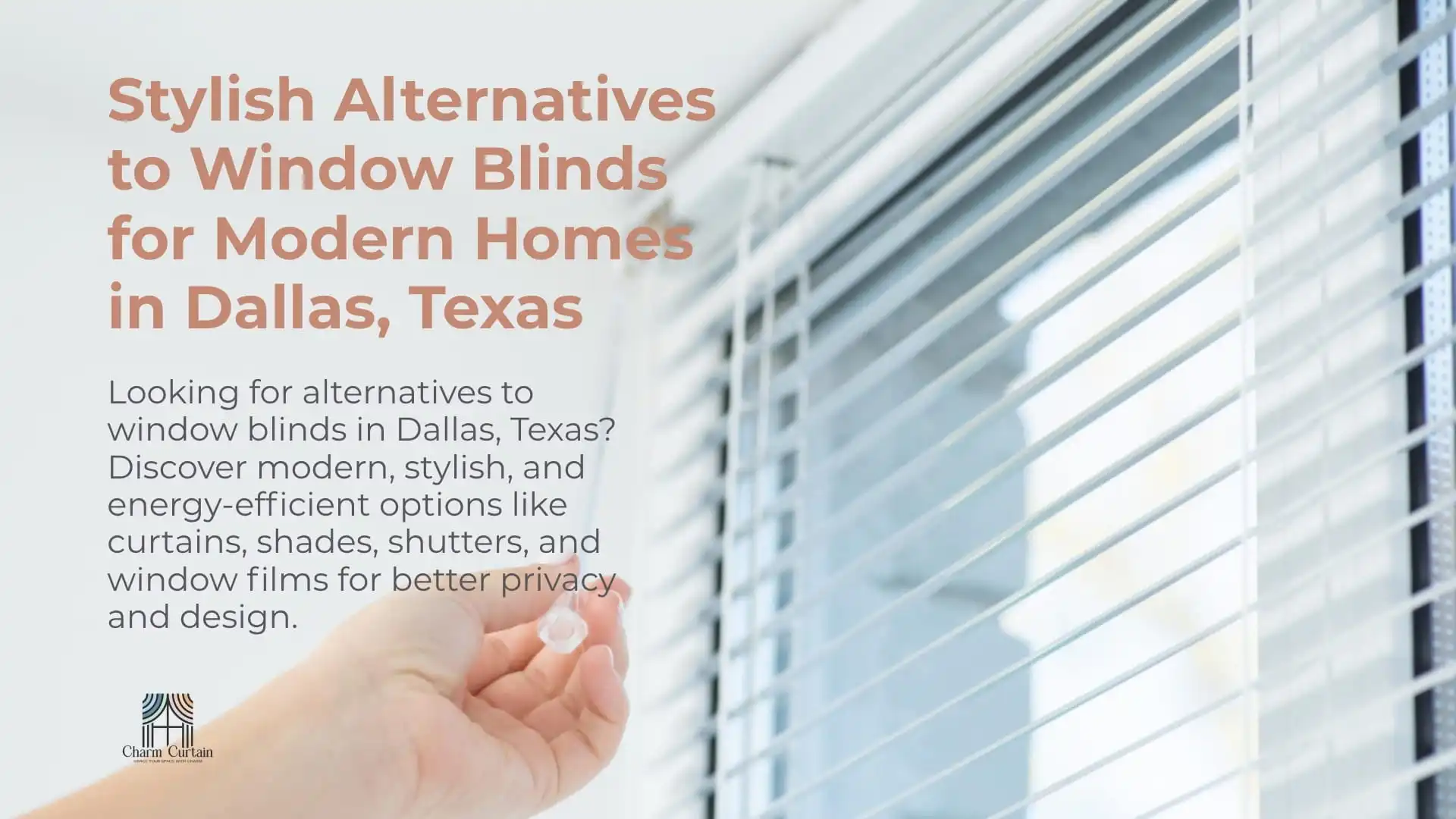
Many clients come to us knowing they do not want standard blinds, but not yet knowing what should replace them. That hesitation makes sense. The right alternative has to solve privacy and light control while still feeling like part of the room.
The good news is that the most interesting window treatments are often softer and more custom than blinds. They can bring in movement, fabric, texture, and scale that make the window wall feel finished instead of purely functional.
What to know first
- Choose drapery if you want the warmest and most tailored visual result.
- Roman shades are a strong alternative when you need softness in a compact footprint.
- Woven shades add natural texture and suit transitional or organic interiors.
- Layering a sheer with a secondary treatment gives the room the most flexibility from morning to night.
| Option | Useful for | Check before choosing |
|---|---|---|
| Curtains | Fabric softness and a layered window wall | Side stack, heading, lining, and care. |
| Roller shades | A simple profile and fabric-based light control | Nighttime privacy and gaps around the fabric. |
| Cellular shades | A folded fabric finish and opacity choices | Mounting clearance and how much view you want when lowered. |
| Roman or woven shades | A textured alternative to consider | Ask about availability, lining, and the specific material. |
Curtains and drapery for softness and scale
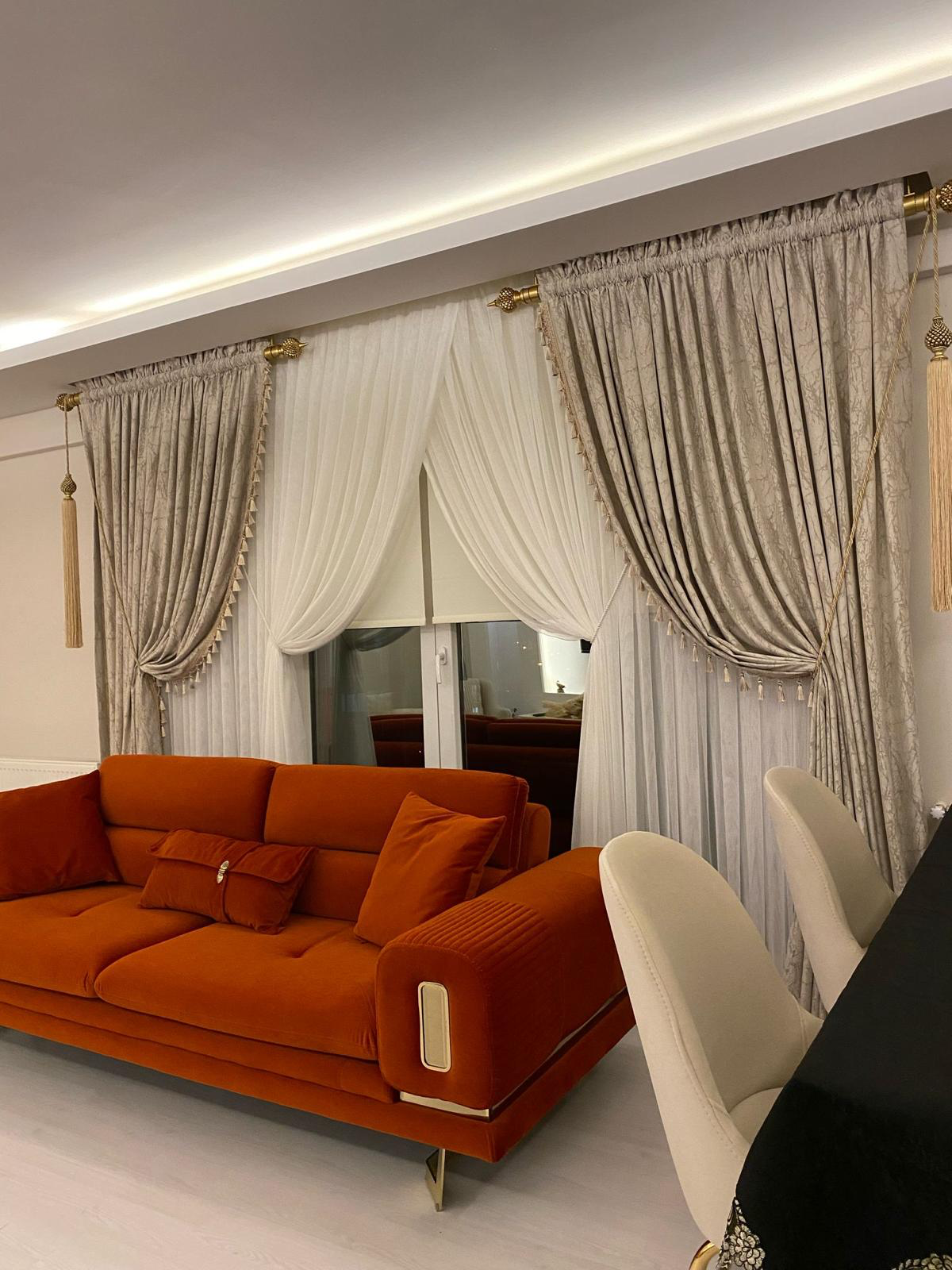
If the room feels hard, flat, or acoustically sharp, curtains are usually the first place we look. They absorb sound, soften daylight, and visually frame the architecture in a way blinds rarely can.
Ripple-fold and pinch-pleat drapes work especially well when you want the treatment to feel custom. They read less like an add-on and more like an integrated layer of the room.
Compare our curtain, blind, and shade collectionsExplore roller and solar shade choices
Roman shades when space is limited
Roman shades deliver the softness of fabric without requiring side stack space. They are ideal over kitchen sinks, in breakfast nooks, or anywhere furniture sits close to the opening.
Because the shade folds into itself, the result feels more tailored than a blind while still giving you a compact profile.
- Flat Romans feel cleaner and more modern.
- Relaxed Romans add an easy, casual softness.
- Blackout linings make them bedroom-friendly.
Woven shades for organic warmth
Natural woven shades bring in a layered, handcrafted texture that works beautifully with wood floors, limewash walls, and neutral upholstery. They can make a room feel collected rather than newly installed.
We often pair them with side panels so the shade handles function while the drapery adds fullness and vertical elegance.
The best blind alternative is usually the one that improves the room even when the treatment is fully open.
Cafe curtains, shutters, and specialty options
Not every room needs full-height coverage. Cafe curtains can be charming in kitchens and baths, especially when you want privacy with daylight. Interior shutters work well when the home has a more traditional architectural language.
For contemporary homes with strong sun exposure, solar shades can also be a useful alternative. They keep the visual language quieter than blinds while preserving outward views during the day.
How we help clients choose
We start by asking whether the window needs softness, privacy, glare control, insulation, or all four. Once the room priorities are clear, the right treatment usually narrows quickly.
That is why in-home consultations matter. A beautiful option in isolation can still feel wrong if it fights the ceiling height, trim style, or furnishing plan already in the room.
We can measure, sample, and style the room with you.
Our in-home consultations across Texas help you decide fabric, lining, hardware, and final drop with the room in front of us.
What is the most popular alternative to blinds?
Layered drapery and Roman shades are the most requested alternatives because they balance softness, function, and a custom appearance.
Are curtains more expensive than blinds?
Custom curtains usually cost more, but they also deliver more presence, fabric quality, and room impact. The best value depends on whether the priority is budget or design effect.
Can I mix shades and curtains together?
Yes, and it is often the strongest approach. A shade can handle privacy and light control while curtains complete the room visually.