
Honeycomb Shades that add softness and efficiency
Cellular construction helps soften daylight while adding an insulating layer at the window.
Book a Consultation
What this treatment solves
Honeycomb Shades, also called cellular shades, use folded fabric cells. Choose opacity and operation around the room: light-filtering fabric keeps a softer glow, while darkening fabrics reduce incoming light. Edge coverage and installation still matter, even when the selected fabric blocks light.
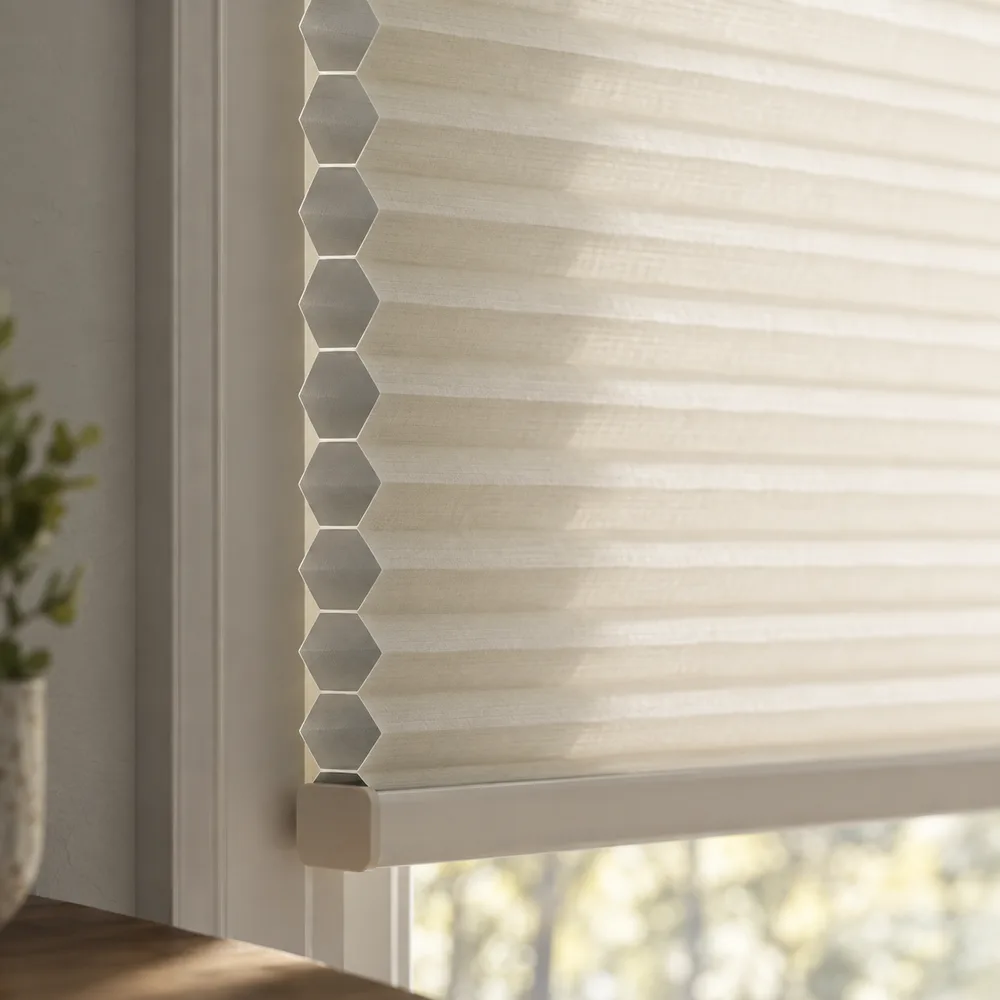
A complete window solution
Honeycomb Shades are chosen when comfort matters as much as appearance, especially in rooms with strong sun, privacy concerns, or changing temperatures through the day.
Their cellular structure helps create a calmer interior feel while keeping the window treatment visually quiet and easy to integrate with the room.
Soft diffused light
Cellular fabrics reduce harsh direct sun and spread daylight more evenly through the space.
Added insulation
The honeycomb construction adds a buffer at the glass for improved comfort.
Clean tailored look
The shade sits neatly at the window without adding visual heaviness.
Custom room planning
Opacity, stack, and operation are selected around sleeping, living, and work needs.
When it is a strong fit
- Bedrooms where opacity and edge coverage can be specified together.
- Living spaces where a folded fabric finish suits the window.
- Privacy-focused rooms where available top-down options are worth comparing.
When to compare alternatives
- Windows where a clear outward view is needed while the shade is lowered.
- Splash-prone locations without approval for the selected fabric.
- Assuming a particular energy saving without product and installation evidence.
Keep the finish looking considered
Follow the selected fabric instructions; do not crush the cells while cleaning.
Remove loose dust gently without soaking the cellular structure.
Have uneven lifting checked before it strains the fabric.
What affects the project estimate?
Window dimensions, the selected fabric or material, lining, hardware, control system, and installation all affect the scope. Share room photos and the number of openings so we can discuss suitable options. Confirm the exact product, current lead time, and what is included before ordering.
Compare materials and treatment typesHow the project moves from idea to finished window
Consultation
Review the room, privacy needs, daylight, style goals, and how the windows are used every day.
Measurement
Measure openings, trim, wall conditions, and mounting options before materials are finalized.
Specification
Choose the treatment type, fabric or material, operation, color, and finishing details.
Installation
Install and adjust the treatment so hardware, movement, coverage, and final appearance work together.
Compare comfort and privacy together
We review cellular fabric options in your home so you can judge light, insulation, and privacy with the real window orientation in mind.